

Washington, DC is not a typical U.S. city when it comes to documents.
Here, translations are often reviewed not by local or state offices, but by federal agencies, embassies, international organizations, and national licensing boards. That makes many people assume the requirements are unusually strict — when in reality, they’re just very specific.
Most rejections in DC don’t happen because the translation was “bad English”. They happen because the format didn’t match U.S. certified translation standards.
Below is what people in Washington, DC most often get wrong — and how to avoid unnecessary delays.
What a “certified translation” actually means in the U.S.
In the United States, a certified translation is not a government-issued document and not a notarized one by default.
A valid certified translation must include:
- a complete, word-for-word translation into English
- translation of all visible content: stamps, seals, handwritten notes, reverse sides, marginal text
- a signed Certificate of Translation Accuracy
- identification of the translator or translation agency
Notarization is not required unless a specific agency explicitly asks for it. Many people assume notarization adds legitimacy. For federal reviewers, it usually doesn’t.
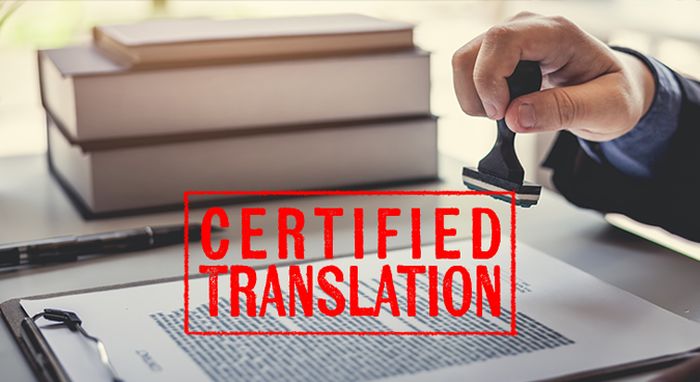
Why Washington, DC is different from most cities
DC concentrates institutions that review documents at a national or international level. That changes expectations.
Certified translations in DC are most often required for:
- USCIS immigration filings
- U.S. Department of State procedures
- embassy and consulate submissions
- federal or nationally headquartered professional licensing boards
- international organizations and NGOs
- credential evaluations and universities
These offices don’t interpret documents. They verify them. If something is missing, the review usually stops immediately.
The most common mistakes that cause rejections
In Washington, DC, rejections are rarely subjective. They’re procedural.
The most common issues are:
- submitting a foreign notarized translation instead of a U.S. certified translation
- omitting reverse pages, stamps, or seals
- inconsistent spelling of names across documents
- cropped scans where margins or seals are partially cut off
- low-quality photos that hide fine details
Federal reviewers don’t ask for clarifications. They reject and move on.
Turnaround times: what’s realistic
For standard civil documents such as birth certificates, marriage certificates, diplomas, or transcripts, the usual turnaround is 24–48 hours, assuming clear scans are provided.
The entire process is handled remotely. No in-person visit is required, even for DC-based agencies.
When format matters more than language
People often focus on whether the translation “sounds official”. Federal agencies don’t evaluate tone.
They check:
- completeness
- consistency
- presence of certification
- readability and formatting
A perfectly accurate translation without a proper certification page is still invalid.
If you want the exact DC-ready format
This page explains the certified translation requirements for Washington, DC in a clear, practical way:
https://translation.center/washington-dc/certified-translation
DC agencies can feel picky, but once the format is right, the process is usually smooth and predictable.